
Just as there are many different types of plastics, so too are there different types of molds that can be utilized for producing all sorts of plastic pieces. And, there are a number of factors that influence the type and size of mold that can be produced. These factors can make a big impact on the return on investment that the mold contributes to the economic viability of a project.
While there are many types of molding processes- injection, compression, insert, resin casting, and more, the broadest category of molds typically utilized in our industry are injection molds. You may have read previous articles we’ve written on how this type of molding works. But as a refresher, think of it as an industrial “waffle iron”. Two halves of the mold open and close, liquefied plastic resin is injected into the closed mold under pressure, the plastic cools and therefore hardens, the two halves of the mold open, and the plastic is removed. This process of closing, molding, cooling, and then opening is called the “mold cycle.”
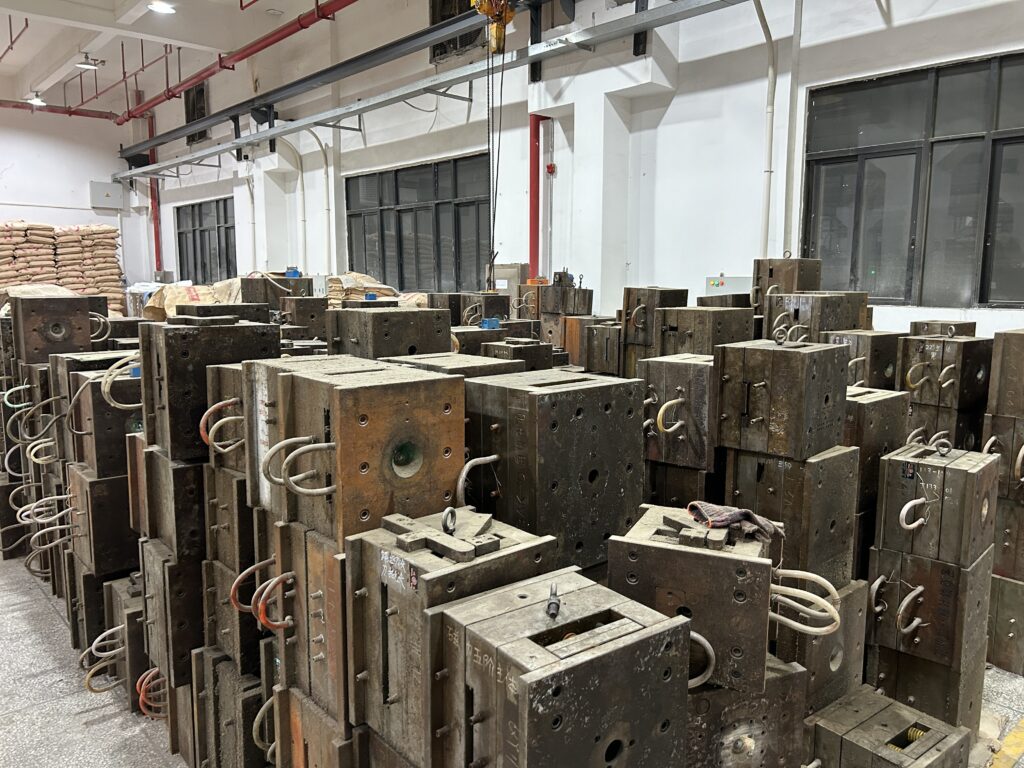
Injection molds are produced in different styles to accommodate whatever shape the produced component needs to take, its function, and/or its appearance. The size and design of the mold, referring to the number and shape of the cavities, is a function of numerous factors: the complexity and shape of the plastic part, the part’s function (thereby influencing the type of plastic resin that will be used for the molding), and the intended production quantity. There is no standard for a mold’s size and overall design- it’s unique to the product being produced.
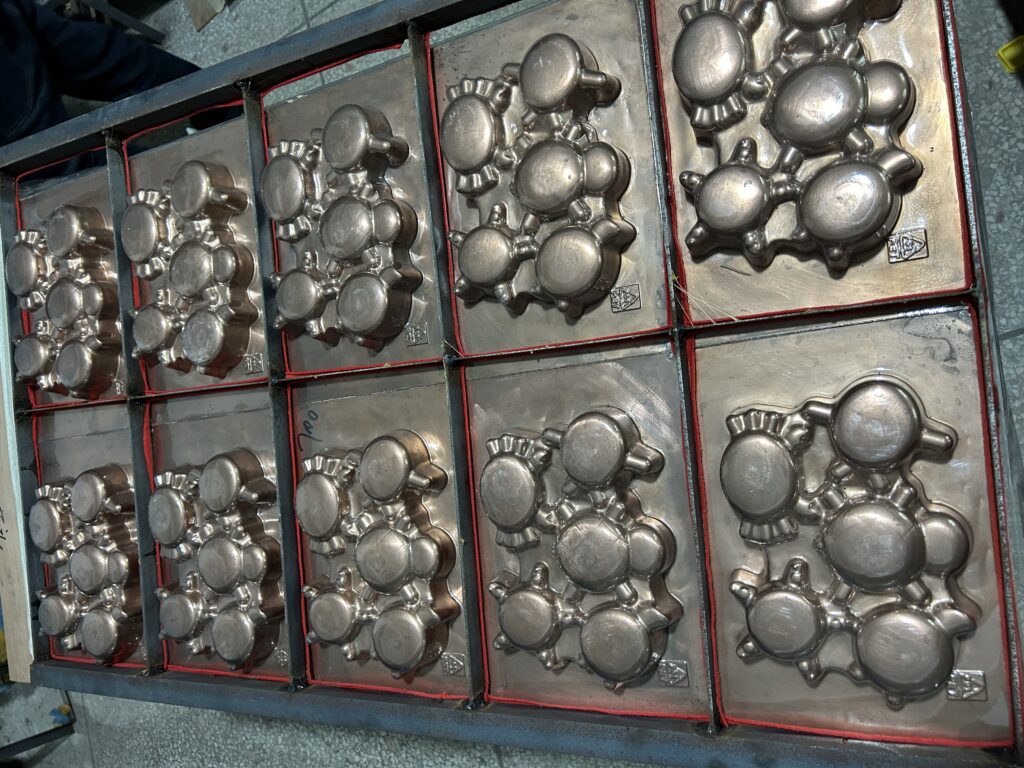
An injection mold starts out as two blocks of hardened steel. The “hardened” part is to enable the mold to produce plastic parts with great precision and over a very long life, but more on that later. Then, cavities are created by cutting away the steel to effectively create a negative of the plastic part that the mold is intended to produce. The cutting process typically uses CNC machining (computer numerical control) to cut away the steel that will form a cavity within the two halves of the mold.
When the mold is closed, this negative (on both halves of the mold) forms the cavity that the liquified plastic fills up to take the shape of the product that is being molded. How the liquified plastic is transported into all the cavities of the mold is through a series of tubes (or ports) that connect all the cavities together.
The plastic is injected into the mold throughout all the distribution ports and into all the cavities under high heat and pressure. This process is where this type of molding (“injection molding”) gets its make. When the plastic solidifies and the two halves of the mold open, the plastic that was in the distribution tubes has also hardened and is removed from the mold. This is called the “sprue”. It is cut away from the parts that were molded in the cavities and then gets ground up for another use (called “regrind”).
The very small point between the part that is molded in the cavities and where the distribution ports end is called the “gate”. The size of the gate is a function of the type of plastic being used for the molding and the size of the part to be molded. If the mold is properly designed, the location of the gate can be difficult to observe in the molded part (but not always).
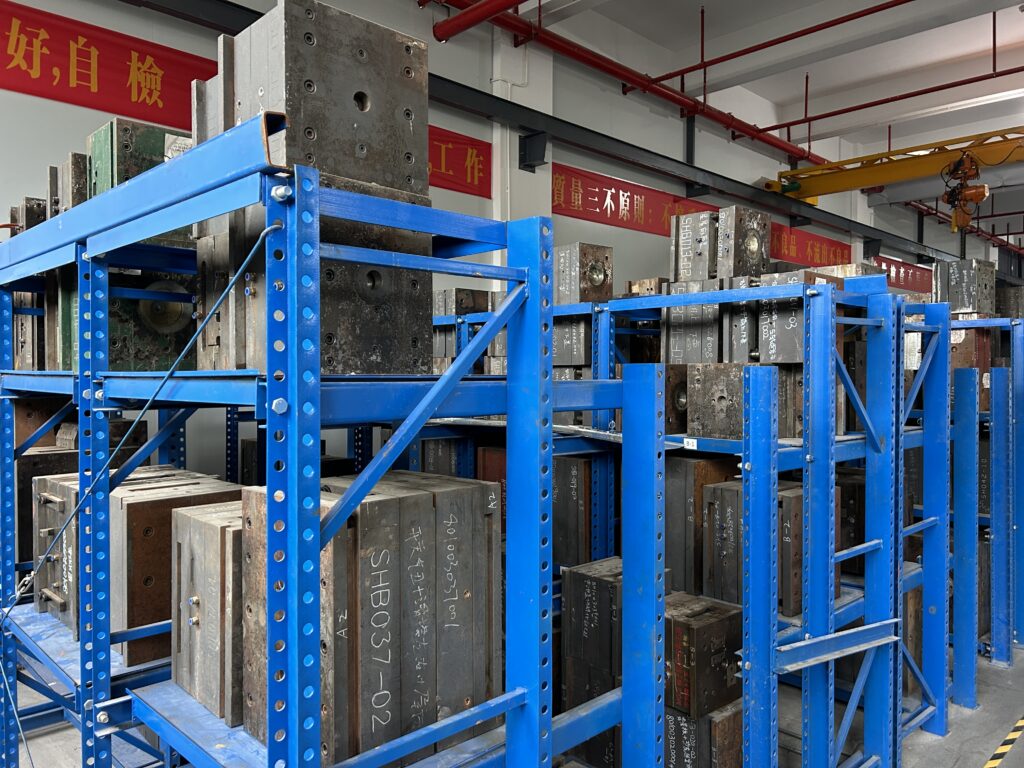
Another point to consider is the material that the mold is constructed from. Earlier I spoke of the fact that a hardened steel mold enables the molding of parts with great precision and “over a very long life”. By this I mean that the mold can complete a very high number of mold cycles and therefore a very high production quantity of components. We have been using some molds year after year for over 20+ years.
For other projects that don’t require a very high production quantity (in the tens or hundreds of thousands of units), molds can be produced with a softer aluminum material, or be designed as a smaller size (fewer cavities) and molded on a smaller molding machine.

So, as you can see there are many factors that influence the construction of a mold. The type, size, and design of a mold is considered intellectual property. It’s closely coveted by factories that use the molds for their manufacturing. This explains why factories throughout southeast Asia are typically loath to allow the molds they’ve produced to be transferred to competitor factories.