If you have found yourself here again, it is probably because you are interested in manufacturing services focused on custom molded plastics. Well, congratulations! You have come to the right place. GPI has been an expert in custom plastics manufacturing for nearly 50 years and we can’t wait to share what we have learned. A few months ago GPI posted its first lesson: “Plastics 101: Lesson 1 – What is Injection Molding?” and now it is time for lesson two!
Compression Molding
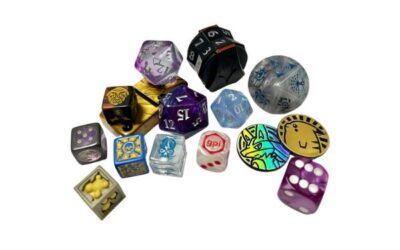
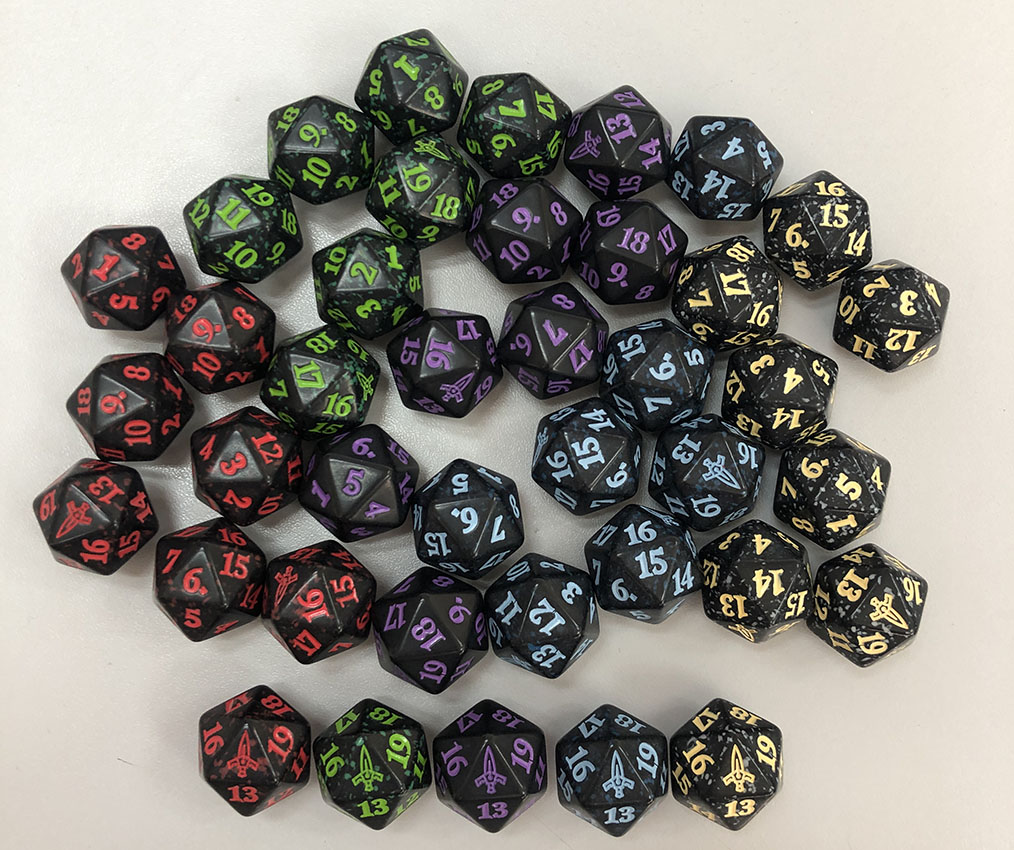
Compression molding is a specialized process that predates injection molding. Instead of melting a plastic resin to be injected into mold cavities, compression molds require a material that fuses under high heat and pressure. This process allows for a great deal of durability and is not compatible with all materials. When GPI handles compression molding, we are most often using urea, which has been used for over 100 years to make dominoes, dice, and other unique components. It is a more cost-effective manufacturing process than what is used for many other plastics, and the end result consistently passes safety standards for toys and games.
How Does It Work?
The first step in the Compression Molding process is to make the mold out of high-quality steel; fortunately, that process is the same as for Injection Molding, so if you are interested in learning more, check out our previous article for more information. Compression molds often have a high cavity count, meaning the number of pieces that can be produced in a single cycle is higher than it is for injection molding.

The mold is made in two halves, one that is designed to define the bottom of the finished product and hold the raw material (called a charge), and the other, which is pushed into place to define the rest of the object’s shape. In any case, the material undergoes a dramatic physical change. Urea, which begins in a powder or pellet form, melts under the high heat and pressure to completely fill the cavity and then cures into a hard solid where all the particles have fused together into a polymer. Once the curing finishes, both halves of the mold are separated, push pins eject the molded pieces from the cavities, and a new “charge” is added to repeat the process.
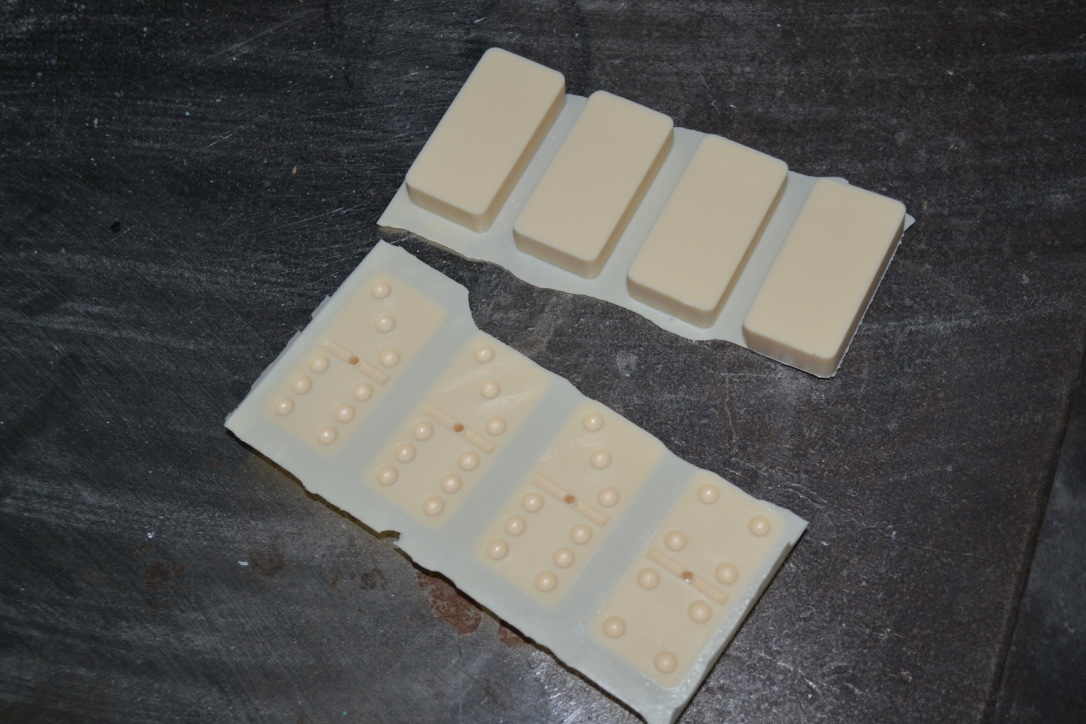
The molded pieces come out as a group (as shown in the image above). The compression molding process pushes any excess charge out around the edge of the cavities. This excess material is called the “flash”, which is cut away before the pieces are inserted into a tumbler for polishing. After polishing, any debossed images can be inked, at which point the pieces are ready for assembly into a finished product.
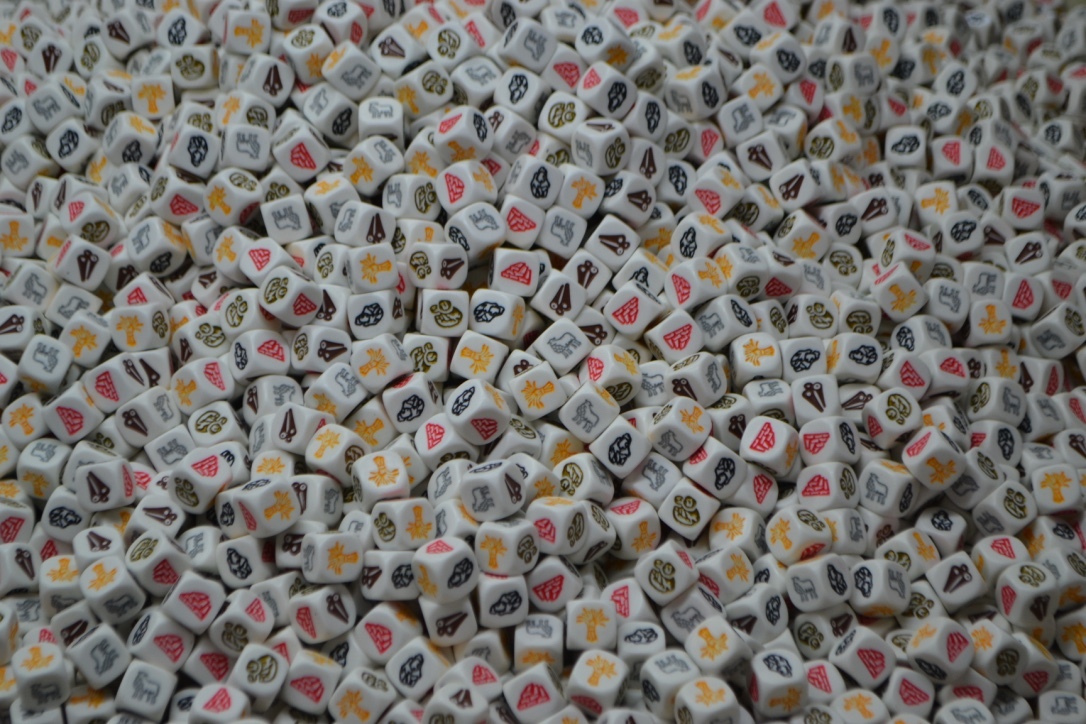
But what can we actually manufacture with Compression Molding?
GPI has specialized manufacturing experience in this kind of production for decades, so we can share some of our specific experiences. Customers have had us produce items such as the tiles for the original Bananagrams games, for spot dice like those used in Monopoly, and classic ivory colored dominoes. Beyond just being an affordable manufacturing process, companies love the urea material specifically because it has an amazing feel to it. Because compression molded urea can be 20% denser than acrylic (and other injection molded plastics), each piece made using this process feels weighty and high-quality, making urea a truly unique material.
There are some limitations, however, while there are standard colors that are (almost) always available (red, yellow, green, blue, black, white, and ivory), there is a high upfront investment for custom colors. Pantone color matching is possible, but only if the material is ordered by the ton! The pieces can be inked and even receive heat transfer images. Since the color possibilities are more narrow with Urea than they are for other types of molding, products that need high volume production without extra bells and whistles are perfect for the compression molding process.

If you have needs for Compression Molded components or finished products, reach out to GPI through our contact us form, and one of our talented Account Managers will help get you started. We cannot wait to be your manufacturing partner and keep your eyes peeled for Plastics 101: Lesson 3!